
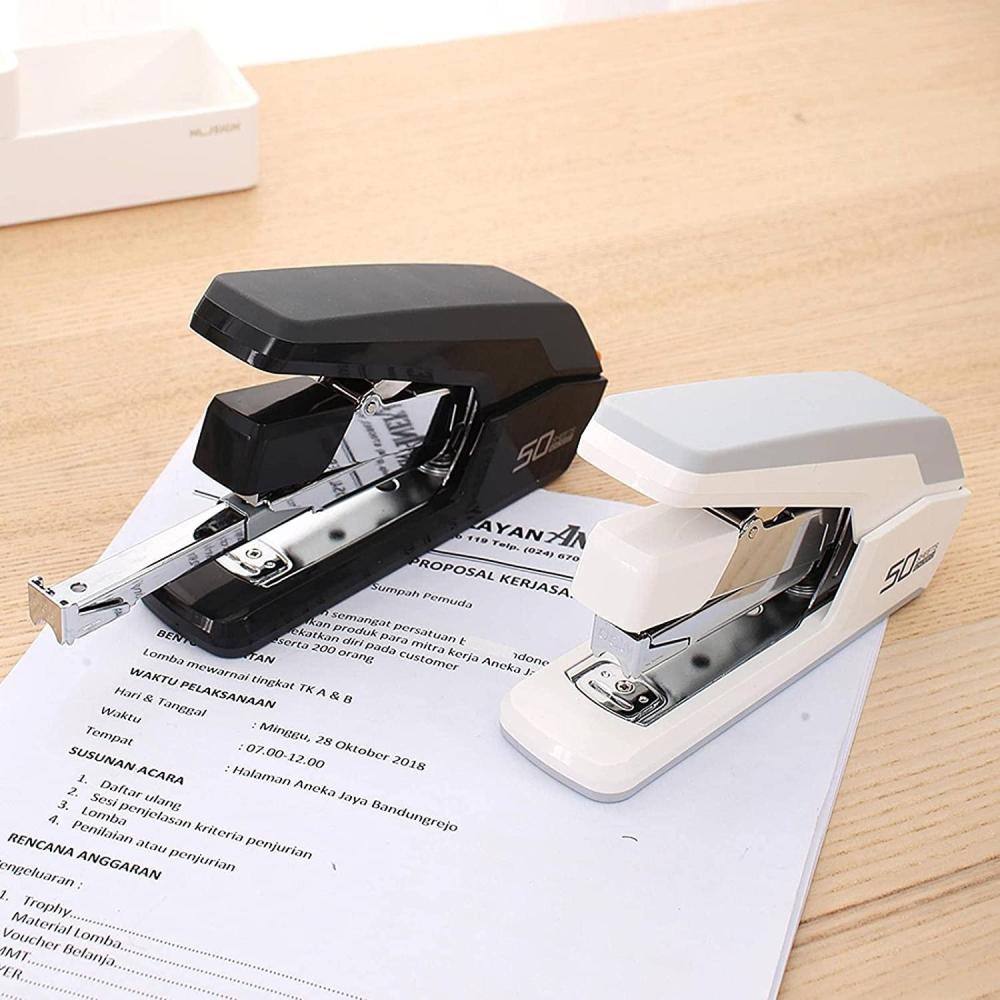
One look at any office in the world, and you'll find it there: the stapler. That simple yet powerful machine that brings together our ideas, contracts, and scattered projects into one cohesive unit.
But have you ever thought that a stapler isn't just a "machine that presses staples"? They come in different shapes, sizes, and technologies to suit every task.
In this guide, we delve into the world of staplers and help you choose the perfect stapler that meets your needs, whether you're a student, administrative employee, or designer.

First: Basic types of staplers (choose your task tool)
Modern staplers are divided into three main types depending on the method of operation and size:
1. Standard Office Stapler (The Standard Workhorse)
Description: It is the traditional form that we all know. They are manual and use standard staples (Standard Staples – usually 24/6 or 26/6).
Features: Ideal for light to moderate everyday tasks (assemble 20-30 sheets maximum). Easy to use and available in different colors and designs.
Disadvantages: Requires manual compression force which can be cumbersome in large quantities.

2. Heavy Duty Stapler (Heavy-Duty Staplers)
Description: Larger and more powerful, specially designed for assembling thick sets of sheets (up to 100-200 sheets). Longer, stronger pins are used.
Features: Indispensable in archives, account sections, or in work environments that require compiling large files. Provides a voltage-saving compression mechanism.
Disadvantages: Large in size and takes up more space on the desk. More expensive and requires a specific type of pin.

3. Electric Stapler (The Power Tool)
Description: Powered by electricity or battery, it molasses at the touch of a button or when inserting paper.
Features: Speed and efficiency in repetitive and bulky assembly tasks. It requires no muscular effort and is ideal for work environments that require constant molasses. Excellent for occupational health purposes (Ergonomics).
Disadvantages: More expensive, requires a power supply, and may be slower to operate for a few seconds than a quick hand stapler.

Second: Advanced features that must be looked for
When buying a new stapler, don't just look at the price. These features can make a big difference in your daily experience:
Low Compression Technology (Less-Effort): A mechanical mechanism that reduces the required strength of molasses by up to 50%. Ideal for those who squirt large amounts daily. Non-slip rubber base helps the stapler stay on the desk while pressing firmly, and prevents scratching the desktop Large pin tank reduces the number of times pins are refilled. Saves time and keeps work flowing. Temporary Pin Mode (Pinning/Tacking) The rotatable base allows you to flip the pin outward instead of inward, which is ideal for hanging papers on bulletin boards or for temporary assembly. Pin Low Indicator A window or indicator that shows when the stapler needs to be refilled before it surprises you with a vacuum.
Third: The Pin: The True Hero (Staple Quality)
The quality of a stapler means nothing without the quality of a pin.
Avoid cheap staples: Poor staples can bend inside the stapler, resulting in a "staple jam" (Stapler Jam). Invest in pins from trusted brands.
Size Compatibility: Always make sure that the pin size matches the stapler requirements (eg: 26/6 means pin leg length is 6mm). Using the wrong pins is the main cause of malfunctions.
Flat Shape (Flat Clinch): Some advanced staplers flatten the ends of the pin completely flat, rather than bending them. This technique makes stapled paper bundles flatter and takes up less storage space.
Conclusion: Your stapler is your investment
A stapler may seem like a routine tool, but choosing the right type with features like lower pressure technology and a flat shape can significantly increase your work efficiency and reduce the frustration of frequent breakdowns.