
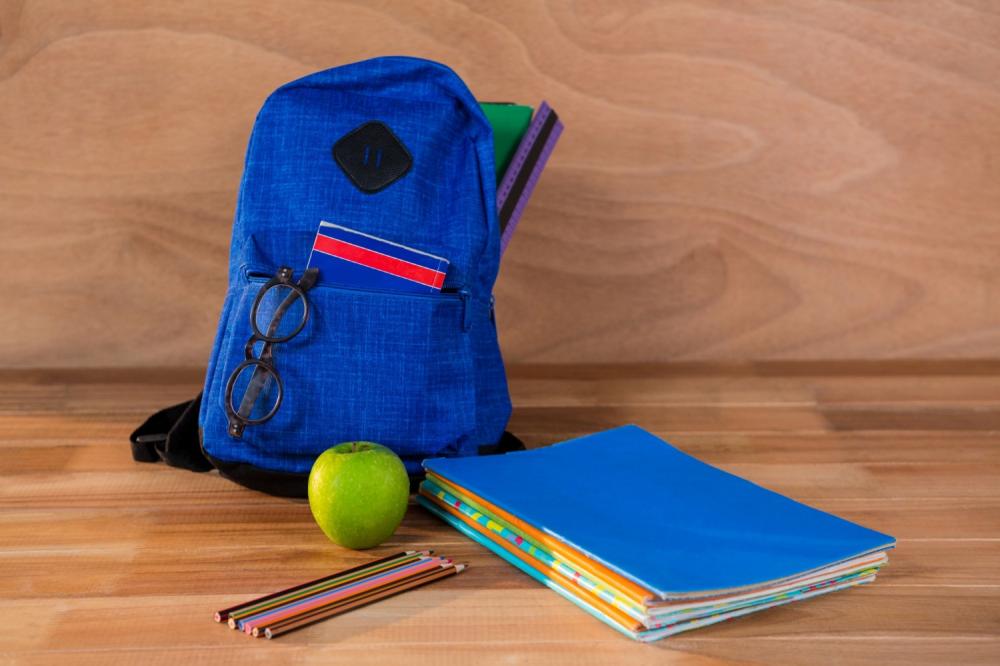
Back-to-school shopping has a way of turning into an unnecessary annoyance. You're working off a list the school sent home, trying to remember what's already sitting in a drawer from last year, and second-guessing whether that fourth notebook is actually necessary. It adds up fast, and most families end up buying more than they need or forgetting something small until the first week of term.
A well-planned back to school stationery kit solves this by covering every function a student actually uses day-to-day: writing, note-taking, measuring, correcting mistakes, staying organised and handling the occasional creative project. The goal isn't to buy everything available, but to match supplies to the student's grade and whatever their specific school asks for.
What Should a Complete Back-to-School Kit Include?
A solid kit covers writing, notebooks, correction tools, measurement, and a few extras for creative work. Get these right, and almost everything else is a matter of preference.
Here's how each category breaks down.
Pencils
Most schoolwork runs on HB pencils, since they strike a workable balance between dark enough to read and firm enough to avoid smudging through a full day of writing. Coloured pencils only need to come into the picture for art classes or subjects that call for them.
Here are two practical pencil options to consider for a school stationery kit:
- FOSKA HB Plastic Pencils - 12 Pack
This plastic pencil is built to take a fair amount of knocking around in a school bag and is smooth to use.
- FOSKA Non-Toxic HB Wooden Pencils - 12 Pack
A good wooden pencil for younger students who want something that sharpens easily and feels familiar in hand.
Pens
Blue pens tend to be the default for everyday schoolwork, though many schools ask for black pens for certain subjects and red pens for corrections or marking. It's worth checking the school's specific rules before assuming any colour is acceptable everywhere.
For everyday school writing, these pen options can be added to the kit:
- YANYAN Blue 1.0mm Ballpoint Pens - 5 Pack
These ballpoint pens cover the colour used most often in daily schoolwork.
- UNIBALL Jetstream Press Ballpoint Black Pens - 2 Pack
A smoother-writing pen for subjects where black ink is specifically required.
Notebooks
The right number and type of notebooks comes down to how many subjects a student is taking and what their school specifically asks for, rather than a fixed number that applies to everyone. Lined notebooks cover most general subjects, while some schools ask for dedicated subject notebooks or A4 formats for particular classes.
Eraser and Sharpener
An eraser and a sharpener are two of the smallest items in a pencil case, but they're also the ones students reach for constantly. A sharpener with a built-in reservoir is worth considering too, since it keeps shavings contained instead of scattering them across a desk or bag.
Add these essentials to keep pencils ready for everyday schoolwork:
- Foska High Quality Eraser - 1 Pc
A good all-round eraser for clean corrections without tearing paper.
- Pencil Sharpener 2 Holes
A sharpener that handles both standard and larger pencils without switching tools.
Ruler and Geometry Supplies
A basic ruler earns its place in almost every student's kit, no matter the grade. Geometry tools like a compass, protractor, and set square only become necessary as students move into subjects that call for accurate measurement and construction.
For measurement and geometry work, consider these supplies:
- Steel Ruler 15 cm
A compact steel ruler that fits easily into a pencil case for daily use.
- FOSKA Plastic Ruler 30x3.8 cm -
This long plastic ruler is better suited to diagrams and larger measuring tasks.
Highlighters and Markers
Highlighters make revision and note review faster by making important information easy to spot again later. Markers tend to come into play for labelling, projects and the occasional creative assignment, rather than daily use.
For highlighting notes and completing school projects, these options can be useful additions:
- FOSKA Highlighter Pen Point 0.4-1.0mm Set of 6
A highlighter set with enough colour variety for organising notes without overdoing it.
- FABER-CASTELL Permanent Fine Tip Marker - Blue
A marker suited to labelling books, folders or project materials.
Glue and Scissors
Glue and scissors see the most use in primary school, where projects, crafts and creative assignments come up often. Neither needs to be part of a student's everyday bag, since they're better kept for the days they're actually needed.
For project and creative work, consider adding:
- FOSKA PVA Glue Stick 8g
A mess-free glue stick that works well for paper-based projects.
- High-Quality Stainless Steel Scissors - 8.2mm
A pair of steel scissors sized appropriately for school use without being awkward for smaller hands.
How to Choose the Right Pencils for School
Picking the right pencil isn't complicated once you know what to look for. Here's a closer look at the choices that actually matter.
Wooden vs Plastic Pencils
Wooden pencils sharpen cleanly and feel familiar, but they wear down over time and can snap if dropped repeatedly. Plastic pencils tend to hold up better against rough handling and offer a more consistent grip, though some students simply prefer the feel of wood. Neither option is universally better, it comes down to how a student handles their supplies day to day.
HB vs Other Pencil Grades
HB remains the general-purpose choice for school writing and basic sketching, since it's dark enough to read clearly without smudging easily. Softer or harder grades only really come into play for specific art techniques or shading work, and most students won't need to think about grades beyond HB for regular classes.
Coloured Pencils for Art Classes
Coloured pencils are worth adding once art classes call for them, but a basic student set covering the core colours is usually enough. Larger art sets with extended shading ranges make more sense for students genuinely pursuing drawing or art as a serious interest, rather than as a school requirement.
How Many Pencils Should a Student Carry?
There's no fixed number every student should carry, and trying to enforce one usually just adds weight to a bag. A small working supply, enough to get through a typical day without running out, is usually all that's needed, with the rest kept at home as backup.
How Many Notebooks Does a Student Need?
The honest answer is that it depends on the student's subjects and whatever their school specifically requires, rather than a number that works across the board. As a starting point, one notebook per major subject covers most day-to-day note-taking, with a separate notebook set aside for rough work so it doesn't get mixed in with graded notes.
Beyond that, an assignment or project notebook can help keep longer pieces of work organised, and a dedicated revision notebook is useful closer to exam periods for students who like to consolidate notes before tests. A4 notebooks tend to suit subjects involving diagrams, longer written responses or subjects that require pasting in handouts, while smaller notebooks work fine for regular note-taking.
Since requirements vary so much between schools, it's worth checking the supply list before assuming a set number applies. Buying a few extra of the most-used format is usually a safer bet than guessing an exact total upfront.
Build a School Stationery Kit Based on Grade Level
What belongs in a kit shifts quite a bit as students move up through school. Here's how the essentials change by stage.
Primary School Students
Primary school kits work best when they stay simple: HB pencils, an eraser, a sharpener, a ruler and a basic set of coloured pencils or crayons cover most classroom needs. Add glue, child-appropriate scissors, a few basic notebooks and a pencil case to hold it all, and there's little reason to include tools meant for older students at this stage.
Middle School Students
Middle school introduces more variety, with blue and black pens becoming standard alongside subject-specific notebooks. Highlighters, basic geometry supplies and folders start to matter more here, and markers can be added where specific subjects or projects call for them, along with some revision supplies as coursework picks up.
High School Students
High school students typically need a wider range of writing instruments to cover different subjects and requirements, along with subject notebooks and A4 paper or notebooks where longer written work is involved. Geometry supplies, highlighters and folders or files remain useful throughout, and items like calculators only need to be added where a specific subject actually requires them.
How to Organize the Stationery Kit
Once the supplies are bought, where they live matters almost as much as what they are. Splitting stationery across the pencil case, school bag and home storage keeps things manageable.
What Should Go in the Pencil Case?
A pencil case works best kept lean: two or three writing instruments, one or two pencils, an eraser, a sharpener, a small ruler and one or two highlighters. Anything beyond that tends to just add unnecessary bulk to a bag that's carried every day.
What Should Stay in the School Bag?
Notebooks, folders and assignment materials belong in the bag itself, along with any subject-specific tools needed for that day. A geometry set can go in too, but only on days it's actually required rather than as a permanent fixture.
What Should Stay at Home?
Spare pencils, extra pens, additional erasers, backup glue and any additional coloured pencils are best left at home rather than carried daily. Keeping replacement stationery in one place at home makes restocking the pencil case simple when something runs out or goes missing.
How to Avoid Overpacking the School Bag
A few simple habits go a long way toward keeping a school bag manageable.
- Carry only what's needed for that specific day.
- Keep replacement supplies at home instead of in the bag.
- Skip large art sets unless a class specifically requires them.
- Use folders to keep loose papers from piling up.
- Check the next day's timetable before packing, rather than carrying everything just in case.
Back-to-School Stationery Checklist
Here's a quick checklist to work through when putting a kit together.
Stationery Checklist
- HB Pencils – Several
- Blue Pens – Several
- Black/Red Pens – If required
- Eraser – 1–2
- Sharpener – 1
- Ruler – 1
- Notebooks – Based on subjects
- Coloured Pencils – If required
- Highlighters – 1–3
- Glue – 1
- Scissors – 1
- Markers – If required
- Geometry Set – If required
- Folders/Files – Based on subjects
Should You Buy a Complete Stationery Bundle or Individual Items?
Both approaches work, and the better option usually comes down to how specific the school's requirements are and what a student already has.
When a Stationery Bundle Makes Sense
A bundle makes shopping quicker and lowers the chance of forgetting something small, since everything arrives together as a consistent set. This tends to work particularly well at the start of a new school year, when a student needs most items fresh anyway.
When Buying Individually Is Better
Buying items individually gives more control when a school has specific requirements that a standard bundle won't match, or when a student already has some supplies left over from before. It also suits families who want to choose exact quantities per item or need different products across different subjects.
Conclusion
Putting together a back to school stationery kit doesn't need to involve guesswork or overbuying. Once you know what each category of stationery is actually for, matching it to a student's grade and school requirements becomes a far more straightforward exercise than staring down a long supply list.
Whether you go with a full bundle for convenience or pick items individually to match specific needs, the goal stays the same: covering writing, notebooks, measurement, correction, and creative work without weighing a school bag down with extras. Masterpieces brings all of these categories together in one place, making it easier to build a kit around exactly what the school year ahead requires. Use the checklist here as a starting point, and adjust the details as you go.
FAQs
1.What should be included in a back-to-school stationery kit?
A complete kit covers pencils, pens, notebooks, an eraser and sharpener, a ruler, and a few extras like highlighters, glue and scissors depending on grade. Exact items shift based on the student's age and specific school requirements.
2.How many pencils should a student have?
There's no fixed number that applies to everyone, but a small working supply for daily use is usually enough. Extra pencils are best kept at home as backup rather than carried every day.
3.How many notebooks does a student need?
This depends on the number of subjects and what the school specifically requires, though one notebook per major subject is a reasonable starting point. A separate notebook for rough work and one for revision can also be useful additions.
4.What stationery should every student carry in their pencil case?
A lean pencil case usually includes two or three writing instruments, a pencil or two, an eraser, a sharpener, a small ruler and a highlighter or two. Keeping it minimal makes the bag easier to carry day to day.
5.What stationery is needed for primary school?
Primary school kits generally need HB pencils, an eraser, a sharpener, a ruler, basic coloured pencils or crayons, glue, child-appropriate scissors and a few notebooks. A pencil case to keep everything together rounds out the essentials.
6.What is the difference between a school stationery kit and a stationery bundle?
A school stationery kit refers to the full set of supplies a student needs based on grade and subjects, while a stationery bundle is typically a pre-packaged product sold as a single purchase. A bundle can form part of a kit, but a kit may also include items bought individually.
7.Where can I buy back-to-school stationery in Saudi Arabia?
Masterpieces offers a dedicated range of school stationery, pens, notebooks and office supplies for shoppers in Saudi Arabia. Checking product specifications and school requirements beforehand helps ensure the right items end up in the kit.